
Waterfront living in Jacksonville, Ponte Vedra Beach, and Atlantic Beach offers unbeatable views and year-round outdoor enjoyment. It also comes with the responsibility of maintaining the structures that protect and access your shoreline. Many Northeast Florida homes still have docks, bulkheads and beach boardwalks built with older or inferior materials such as untreated wood, aging concrete, or low grade lumber. These materials can deteriorate quickly in a coastal environment.
At BOSS Outdoor, we build exclusively with composite materials and marine grade pressure treated lumber because they are engineered for strength, longevity and resistance to harsh waterfront conditions. Homeowners who purchased a property with older installations should complete a seasonal inspection to ensure their structures remain safe and stable.
Winter is the ideal time for these inspections. Cooler weather, lower tides and calmer conditions make issues easier to identify before spring construction schedules fill up.
Below is a winter maintenance guide to help you assess your waterfront structures regardless of the materials currently in place.
Why Winter Is the Best Time for Marine Structure Inspections
Lower Tides Improve Visibility
Winter tide patterns often expose more of your bulkhead or dock pilings. This helps you spot:
- Rot
- Cracking
- Barnacle and marine borer damage
- Separation between wall or deck components
Planning Ahead for Spring Construction
Marine contractors typically book early each year. Inspecting now helps you:
- Address issues before they worsen
- Secure a spring construction slot
- Budget for upgrades or material replacements
Reduced Heat and Moisture Movement
Hot and humid weather causes materials to swell, warp or separate. Winter allows for clearer assessment of underlying issues.
What Waterfront Homeowners Should Inspect This Winter
No matter what material your structures were built with, these inspection points will help you understand their condition and whether they should be repaired or upgraded to composite or marine grade PT lumber.
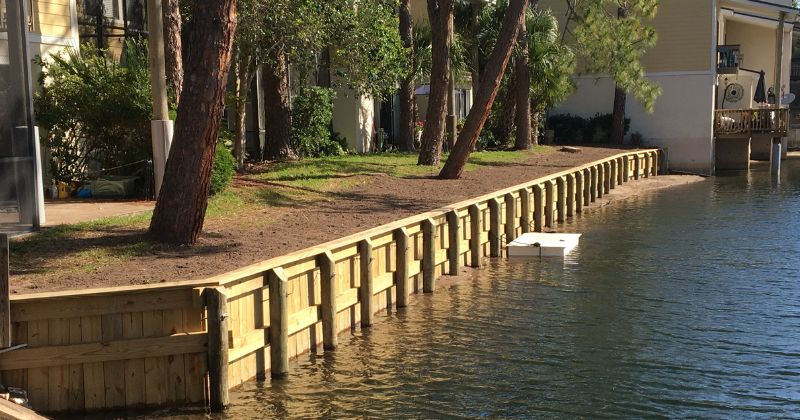
1. Bulkhead Inspection Checklist
Bulkheads built with untreated wood, older concrete panels or low quality materials degrade much faster than marine grade systems.
Look for:
- Soil loss or sinkholes behind the wall, often a sign of structural failure
- Gaps between panels or boards
- Rot or softness in untreated or low grade lumber
- Concrete cracking or spalling in older seawalls
- Forward leaning or bowing, which indicates anchor failure
- Loose tie backs or rusted hardware
If your bulkhead is more than 20 years old or made with materials other than marine grade lumber, composite or engineered panels, it is essential to have it inspected by a marine construction professional.
2. Dock Inspection Checklist
Docks built with untreated wood or low cost lumber deteriorate significantly faster in salt air and tidal environments. Common winter inspection items include:
Deck Boards
Look for:
- Warping
- Soft spots
- Cracks
- Loose or popped fasteners
- Slippery algae buildup
Pilings
Older pilings are highly vulnerable to:
- Marine borer damage
- Splitting at the waterline
- Excessive movement
- Rot or decay
Understructure
Inspect joists and stringers to identify:
- Rot
- Loose hardware
- Sagging sections
Hardware and Connections
Low grade hardware corrodes quickly near saltwater. Check:
- Bolts
- Brackets
- Fasteners
- Pulleys and lift plates
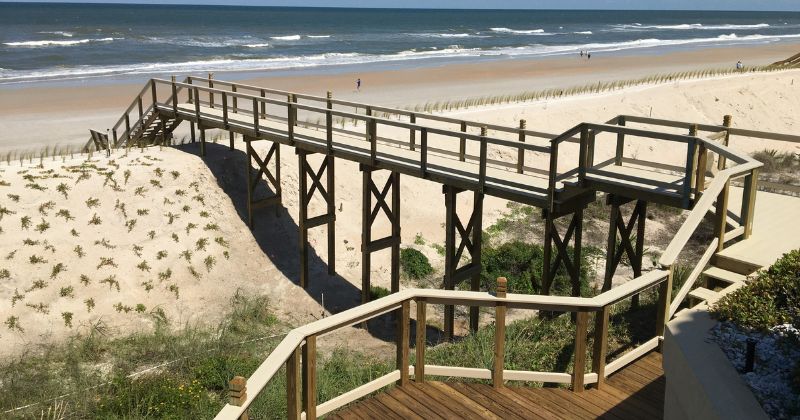
3. Boardwalk and Dune Walkover Inspection Checklist
Many older walkovers were built with interior grade lumber or untreated materials that were not intended for coastal use.
Inspect:
- Railings for looseness
- Support posts for rot or shifting
- Decking boards for soft spots or raised nails
- Understructure movement
- Sand accumulation around critical components
If your walkover was built with inferior materials, upgrading to composite decking with a marine grade lumber frame improves both safety and longevity.
4. Waterfront Landscape Lighting
Winter is a great time to check:
- Fixture wiring
- Transformer loads
- Corrosion
- Lights installed in or near docks and walkways
If your lighting system is older or overloaded, upgrading to a low voltage LED layout improves both safety and efficiency.
5. Boat Lifts and Mechanical Components
Even though your lift may not be part of the lumber structure, it is connected directly to your dock. Inspect:
- Cables
- Motors
- Drive pipes
- Brackets
- Pulleys
Should You Hire a Professional or DIY?
Homeowners can spot visible surface issues, but deeper structural problems are not always obvious. A professional inspection assesses:
- Structural load capacity
- Fastener corrosion
- Tie back conditions
- Piling integrity
- Underside components
- Overall safety
If your marine structures include older or inferior materials, a professional evaluation is strongly recommended.