
Bulkheads are one of the most important investments a waterfront homeowner can make. In Jacksonville, Ponte Vedra Beach, and along the St. Johns River, bulkheads protect your shoreline, stabilize your property, and preserve long-term home value.
If you are planning a bulkhead project in 2026, winter is the ideal time to understand pricing, material options, and what separates high-quality construction from short-term fixes. Many older bulkheads in Northeast Florida were built with inferior materials that were never intended to withstand salt air, tidal movement, and marine borers.
At BOSS Outdoor, we build bulkheads using marine-grade pressure-treated lumber and composite components only, ensuring durability, structural integrity, and long service life.
This guide breaks down what bulkhead construction costs look like in Jacksonville for 2025 and what factors influence pricing.
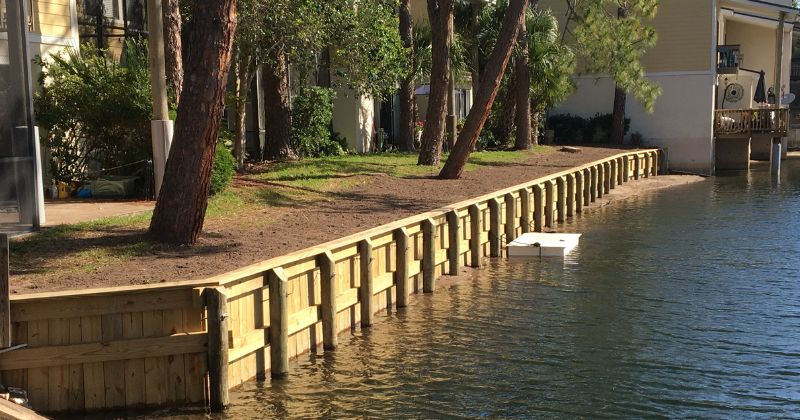
Average Bulkhead Construction Costs in Jacksonville
Bulkhead pricing is typically measured by linear foot, but total project cost depends on several site-specific factors.
Typical 2026 Cost Ranges
- Marine-grade lumber bulkhead construction: $500 to $850 per linear foot
- Composite-integrated bulkhead systems: $650 to $900 per linear foot
These ranges reflect professional installation, proper anchoring, and compliance with local and state permitting requirements.
Lower prices often indicate:
- Inferior materials
- Shallow anchoring
- Minimal reinforcement
- Shorter lifespan
What Factors Affect Bulkhead Construction Cost?
1. Material Quality
Bulkheads built with untreated wood or non-marine lumber deteriorate much faster and require earlier replacement.
Marine-grade pressure-treated lumber:
- Resists rot and marine borers
- Handles constant moisture exposure
- Maintains strength under load
Composite components used in caps or finishes reduce maintenance and improve appearance.
2. Wall Height and Water Depth
Taller bulkheads and deeper water require:
- Longer pilings
- Additional reinforcement
- Heavier equipment
This directly impacts cost.
3. Soil Conditions
Northeast Florida has a wide range of soil types. Sandy or loose soil often requires:
- Deeper embedment
- Additional tie-backs
- Reinforced anchoring systems
4. Access to the Property
Water-only access, limited yard space, or tight setbacks can increase labor and equipment needs.
5. Removal of Existing Bulkhead
Many homes still have failing timber or outdated walls in place. Removal and disposal add to overall cost but are necessary for proper installation.
Why Inferior Bulkheads Cost More Over Time
Lower-quality bulkheads often fail due to:
- Rotting lumber
- Inadequate tie-backs
- Poor anchoring
- Improper drainage
Homeowners end up paying twice through:
- Repeated repairs
- Soil replacement
- Emergency stabilization
- Full replacement sooner than expected
A properly built marine-grade lumber bulkhead can last 30 to 40 years when installed correctly.
Winter Is the Best Time to Plan a Bulkhead Project
December through February offers several advantages:
- Easier inspections due to lower tides
- Faster permitting preparation
- Better contractor availability
- Spring construction scheduling
Planning now helps avoid delays when demand increases.
Permitting Considerations in Jacksonville and St. Johns County
Bulkhead construction typically requires:
- Florida Department of Environmental Protection review
- Local county permits
- Potential Army Corps coordination depending on location
An experienced marine contractor manages this process from start to finish.
Choosing the Right Bulkhead Contractor
When evaluating contractors, ask:
- What materials do you use and why
- Do you specialize in marine construction
- How do you anchor and reinforce the wall
- Do you handle permitting
- Can you provide local project examples
Experience and material quality matter more than lowest price.