
Choosing the right material for a dock, bulkhead or boardwalk is one of the most important decisions a waterfront homeowner can make. In Jacksonville, Ponte Vedra and St. Augustine, many older structures were built with untreated wood, non marine rated lumber or materials that deteriorate quickly near saltwater. These older installations often require frequent repairs or complete replacement.
BOSS Outdoor builds exclusively with composite materials and marine grade pressure treated lumber because both materials are engineered to withstand intense sun, salt exposure and tidal changes in Northeast Florida. This guide explains how the two materials compare and how each should be used for long lasting waterfront construction.
Why Material Selection Is Critical
Waterfront environments expose structures to:
- Salt spray
- Moisture
- UV radiation
- Marine borers
- Boat wake impacts
- Shifting sand and soil
Low grade materials fail quickly in these conditions. Choosing the correct material greatly reduces long term maintenance and improves safety.
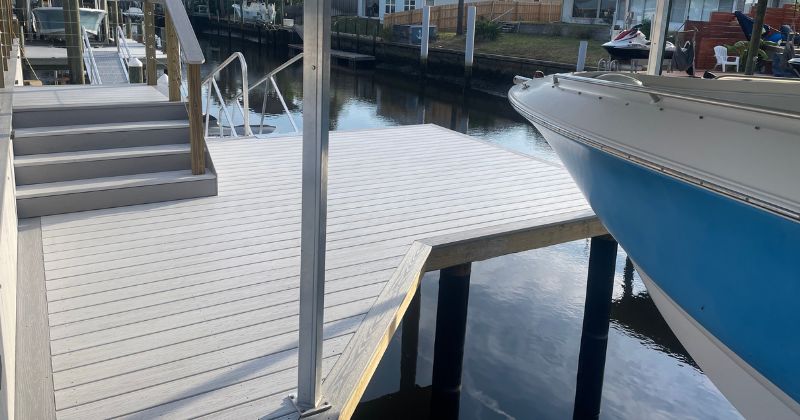
Composite Materials: Strengths and Best Uses
Composite materials provide exceptional performance for walking surfaces and decking.
Benefits of Composite
Low Maintenance
Composite does not require staining, sealing or painting.
No Rot or Splintering
Ideal for dock surfaces, ramps and boardwalks.
Slip Resistant
Many composite products offer textured finishes that improve traction.
Uniform Appearance
Composite maintains consistent color and shape over time.
Limitations of Composite
Composite is not suitable for:
- Pilings
- Structural beams
- Load bearing framework
- Bulkhead walls
It is best used as a surface material, not as the structural core of a marine installation.
Best Uses for Composite
- Dock decking
- Walkover and boardwalk treads
- Ramps
- Stair surfaces
- Handrails and trim
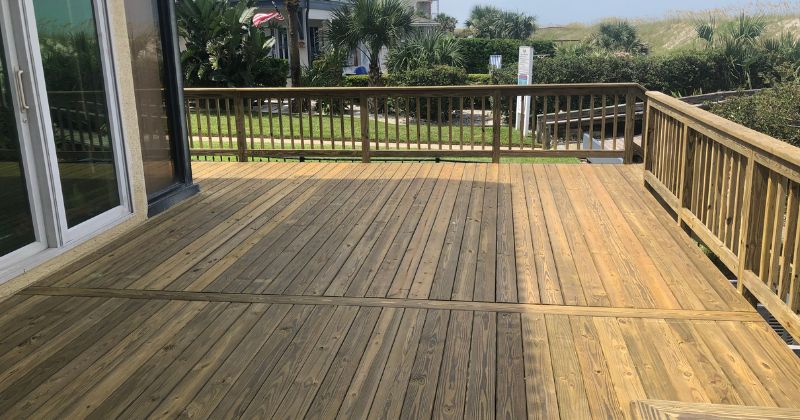
Marine Grade Pressure Treated Lumber: Strengths and Best Uses
Marine grade PT lumber is treated to withstand saltwater exposure and marine borer activity.
Benefits of Marine Grade Lumber
High Structural Strength
Perfect for bulkheads, pilings and framing systems.
Excellent Durability
Engineered for long lifespan in harsh conditions.
More Affordable Than Composite
Provides strength without premium cost.
Versatile
Works in virtually all marine construction applications.
Limitations of Marine Grade Lumber
Requires Periodic Inspection
Even marine lumber must be monitored for:
- Fastener corrosion
- Minor splitting
- Surface aging
Natural Weathering
Color and texture change over time due to sun and moisture.
Best Uses for Marine Grade Lumber
- Bulkhead walls
- Dock pilings
- Structural dock framing
- Boardwalk support posts and beams
- Dune walkover framing
Composite vs Marine Lumber Comparison
| Feature | Composite | Marine Grade PT Lumber |
| Structural Strength | Low | High |
| Rot Resistance | Excellent | Excellent when treated |
| Maintenance | Very Low | Moderate |
| Cost | Higher | Lower |
| Best Use | Surface decking | Structural framing and bulkheads |
Which Material Should You Choose?
For docks
Use composite decking with a marine grade lumber frame.
For bulkheads
Marine grade lumber is the superior choice.
For boardwalks and walkovers
Use composite for the walking surface and marine lumber for the structure.